
CNC turning
CNC turning is a machining process in which the workpiece rotates while a cutting tool removes material, producing rotationally symmetric parts such as shafts, pins, bushings and flanges. Turning centres with driven tools can also drill, mill flats and cut keyways in the same setup.
Request a quote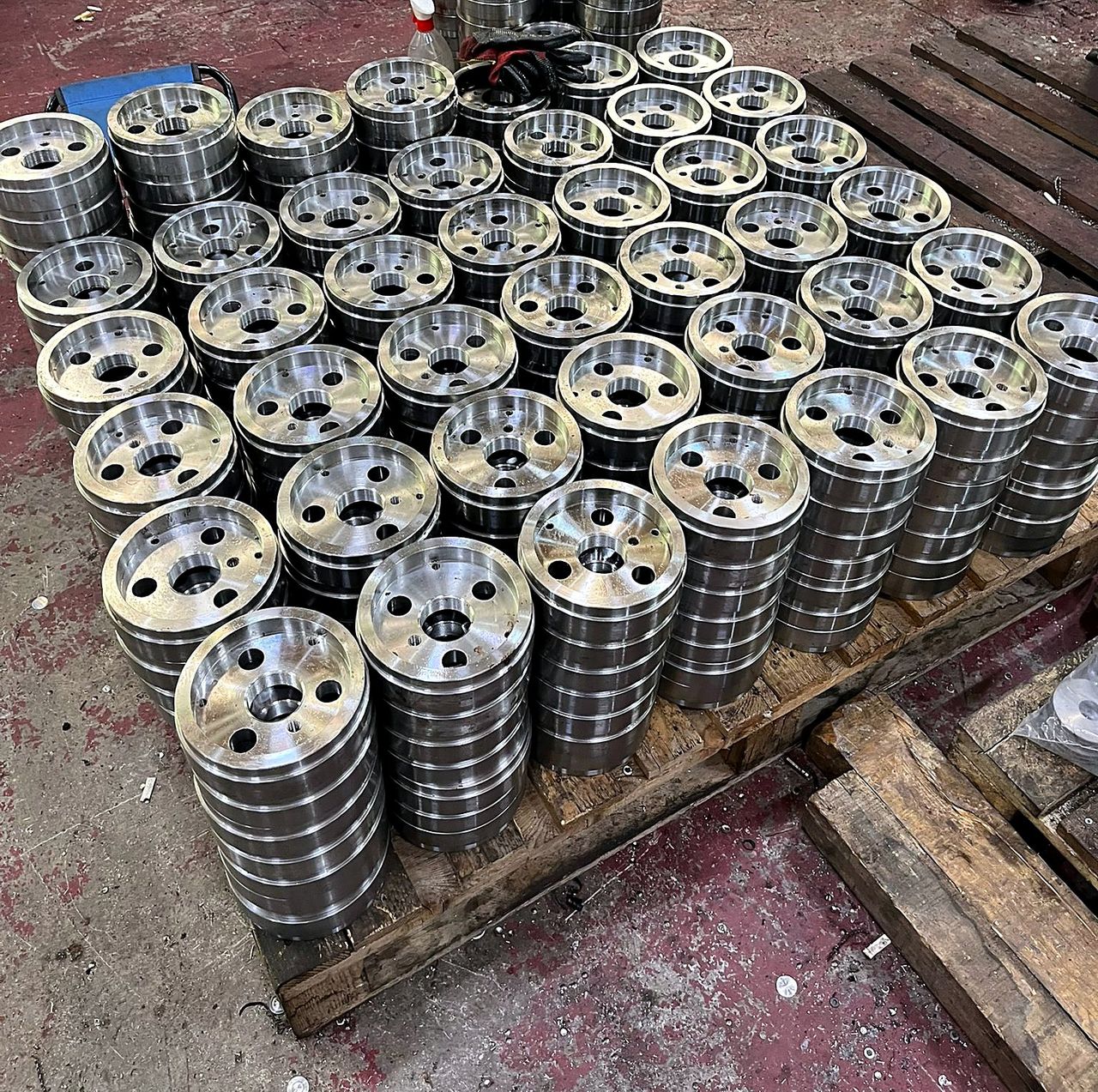
At a glance
Typical parts
- Shafts, axles and spindles
- Pins, bolts and special fasteners
- Bushings and sleeves
- Flanges, discs and rings
- Hydraulic fittings, pistons and valve parts
- Turned castings and forgings
Quantities
- Single parts and prototypes
- Large series from bar feeders
Inspection
- Full first article
- CMM where needed
- Gauges for diameters, threads and fits
- Roughness and roundness if specified
Documents
- Dimensional report
- EN 10204 3.1 certificate
- First article inspection report
How CNC turning works
The workpiece is clamped in a chuck or collet and rotates at a controlled speed. Cutting tools move along programmed paths to turn outside diameters, faces, grooves, threads and bores. Turning centres with driven tools and a C-axis can also drill cross holes, mill flats and cut keyways without moving the part to another machine. Bar feeders allow unattended production of series parts from bar stock.
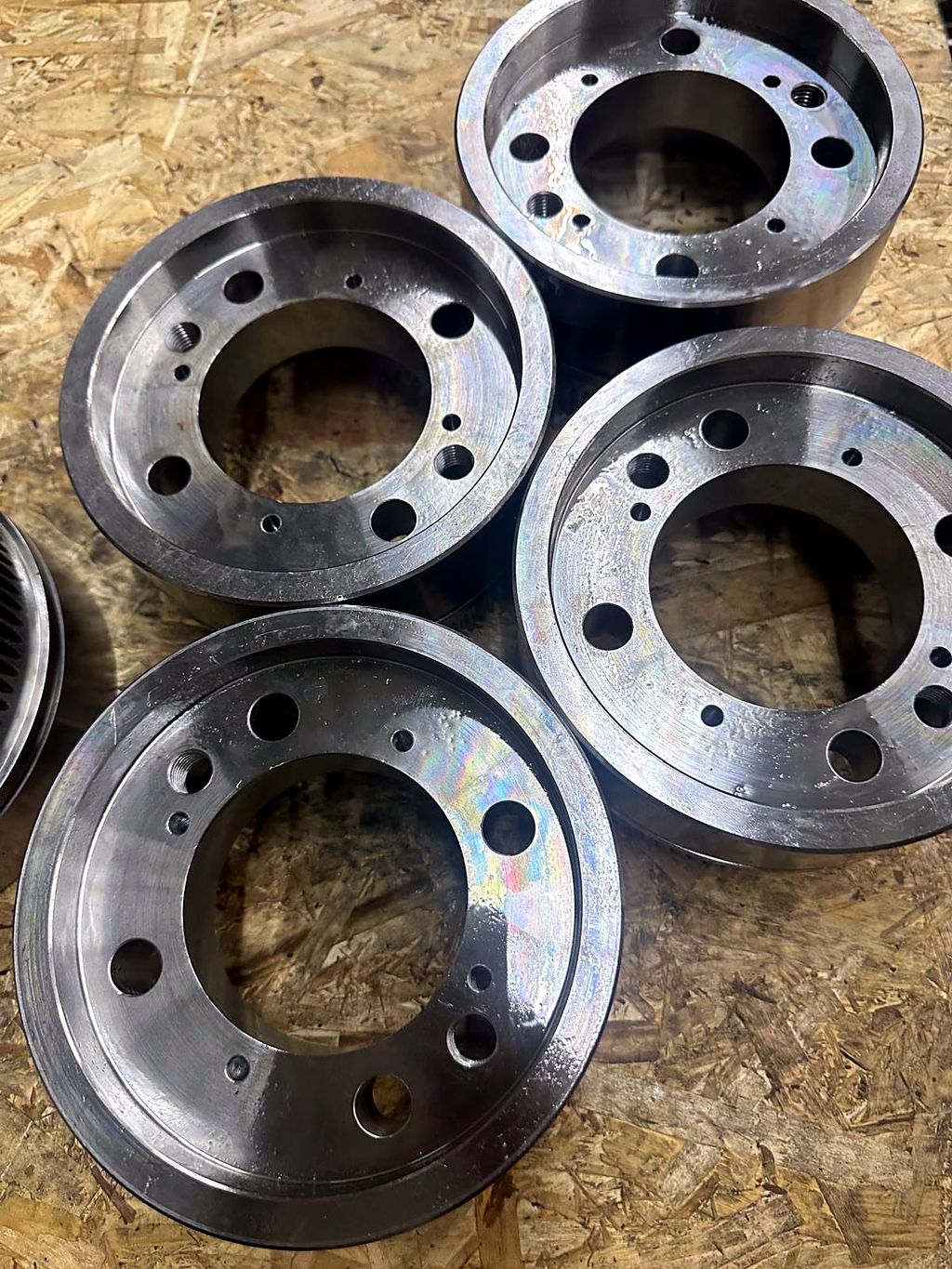
Dimensional and surface inspection
First articles are measured in full and documented in a first article inspection report, using a coordinate measuring machine (CMM) where the geometry calls for it. Diameters, threads and fits are checked with gauges during series production. Surface roughness is measured with a profilometer and roundness on a form tester where the drawing specifies them.
Standard documents are a dimensional report and a material certificate to EN 10204 3.1. More on the quality page.
Materials for CNC turning
Carbon and alloy steel
- C45
- 42CrMo4
- 16MnCr5
- 11SMnPb30 (free-cutting)
Stainless steel
- 1.4301
- 1.4305
- 1.4404
Aluminium
- EN AW-6082
- EN AW-2007
Copper alloys
- CuZn39Pb3 (brass)
- CuSn12 (bronze)
Engineering plastics
- POM
- PA
- PEEK
There is no fixed size or tolerance limit. Send us your drawing and we will define the right production route and confirm feasibility. Where the drawing has no specific tolerance, general tolerances to ISO 2768 are common.
Is this the right process?
When CNC turning is the right choice
- The part is rotationally symmetric or mostly round
- The part is made from bar, or is a forging or casting that needs turned functional surfaces
- Quantities range from single parts to large series
When another process is better
- Prismatic parts such as housings and plates: CNC milling
- Hardened surfaces or very fine finishes on fits: follow turning with CNC grinding
- Highly loaded shafts in larger quantities: start from a forging to save material and improve strength
Related pages
- CNC millingCNC milled parts in steel, stainless steel and aluminium from machine shops in Türkiye: housings, plates, brackets and machined castings, with CMM reports.
- CNC grindingCNC cylindrical, centreless and surface grinding of shafts, pins, spools and plates from machine shops in Türkiye, usually after hardening, with reports.
- Secondary operationsHeat treatment, galvanising, powder coating, KTL e-coating, painting and assembly for cast, forged and machined parts, managed by QProcess in the same order.
- ForgingClosed-die and open-die steel forgings, rolled rings and shafts from forges in Türkiye, supplied raw, heat treated or machined, with EN 10204 3.1 certificates.
- Centrifugal castingCentrifugal castings in bronze, iron and steel from foundries in Türkiye: bushings, rings, liners and tubes with a dense structure, supplied raw or machined.
- Continuous castingContinuous cast bars and tubes in bronze, grey iron and ductile iron from manufacturers in Türkiye, supplied as stock lengths or machined into bushings.
- Machinery and equipmentMachine bases, housings, shafts, gear blanks, guides and plastic wear parts for machinery and equipment manufacturers, produced by manufacturers in Türkiye.
- Agricultural machineryGearbox housings, PTO shafts, hubs, brackets, counterweights and wear parts for agricultural machinery manufacturers, produced by manufacturers in Türkiye.
- Other industriesCast, forged, machined and plastic parts for pumps and valves, hydraulics, rail, material handling, industrial automation, robotics and marine equipment.
Frequently asked questions
What is the difference between a CNC lathe and a sliding-head (Swiss-type) lathe?
A CNC lathe or turning centre holds the part in a chuck and suits most diameters and lengths. A sliding-head lathe guides the bar through a bushing close to the tool, which keeps long, slender parts stable. It is used for small-diameter precision parts in large quantities.
Can you turn castings and forgings?
Yes. Forged shafts, flanges and rings and cast hubs or bushings are turned to drawing in the same way as bar stock. We coordinate the raw part and the machining and deliver the finished part.
Do you supply turned parts heat treated or coated?
Yes. Turned parts can be hardened, quenched and tempered, case hardened, zinc plated, nickel plated or coated as specified. These steps are part of the same order.
Send your drawing. You get a quotation in 3 to 5 working days.
Your drawings are handled confidentially; NDA on request.