
Casting
QProcess supplies castings in iron, steel, aluminium and copper alloys from foundries in Türkiye. We choose the casting process and the foundry for each part, then manage samples, machining, inspection and delivery.
Request a quote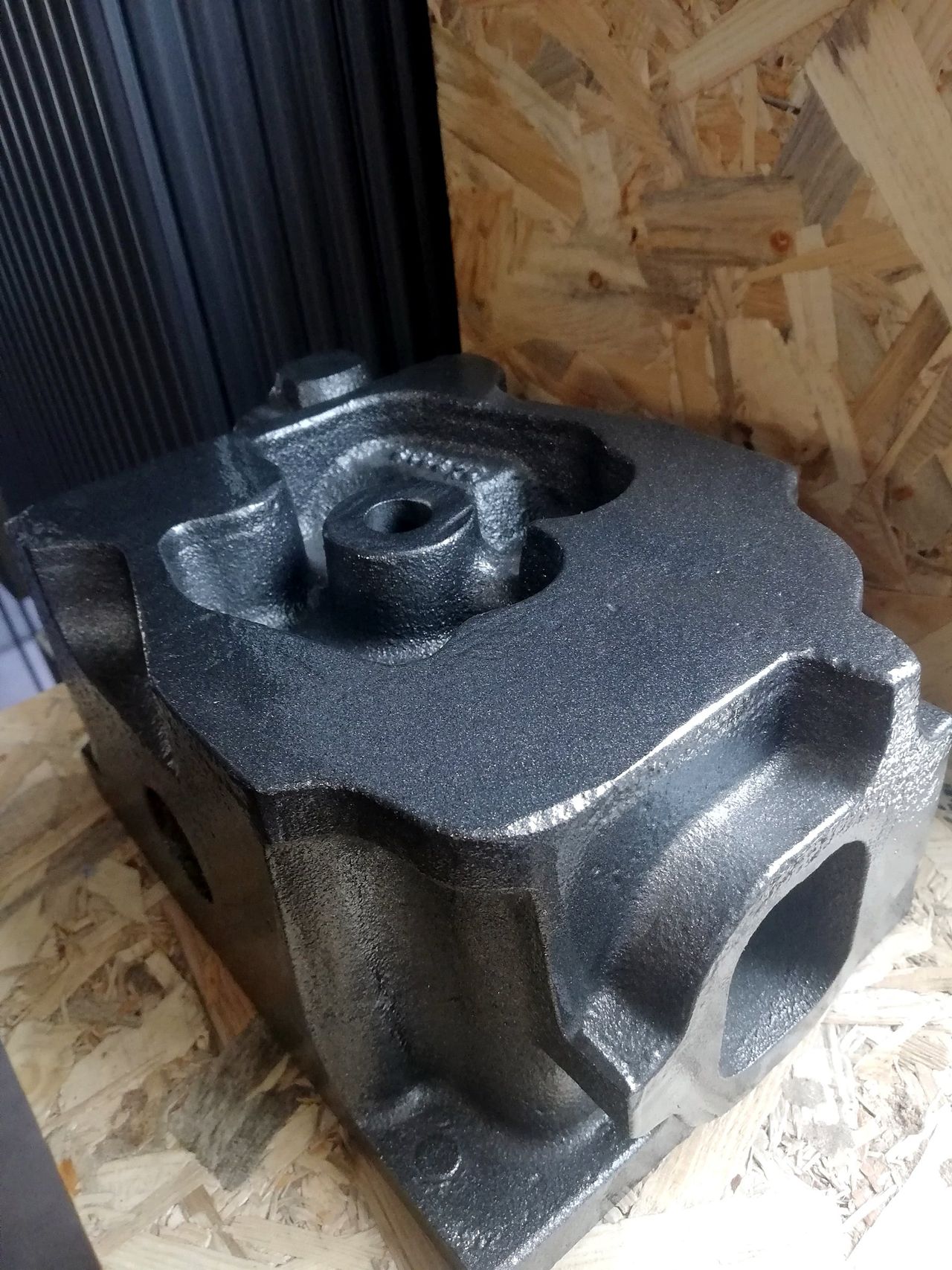
In this section
- Sand castingSand castings in grey iron, ductile iron, cast steel, aluminium and bronze from foundries in Türkiye, supplied raw or machined, with EN 10204 3.1 certificates.
- Die castingHigh-pressure aluminium die castings for housings, covers and brackets, produced by die casters in Türkiye and supplied machined, coated and inspected.
- Permanent mould castingGravity and low-pressure permanent mould castings in aluminium and copper alloys from foundries in Türkiye, for dense, heat-treatable parts in medium series.
- Investment castingInvestment castings (lost wax) in carbon, alloy and stainless steel from foundries in Türkiye: near-net-shape parts with fine detail and little machining.
- Centrifugal castingCentrifugal castings in bronze, iron and steel from foundries in Türkiye: bushings, rings, liners and tubes with a dense structure, supplied raw or machined.
- Continuous castingContinuous cast bars and tubes in bronze, grey iron and ductile iron from manufacturers in Türkiye, supplied as stock lengths or machined into bushings.
Casting processes compared
Each casting process has a range of quantity, size and material where it is the economical choice. The table gives a first orientation; the final choice depends on the drawing.
| Process | Typical materials | Quantities | Tooling cost | Typical parts |
|---|---|---|---|---|
| Sand casting | grey and ductile iron, steel, stainless, aluminium, bronze | single parts to large series | low | housings, pump and valve bodies, hubs |
| Die casting | aluminium | large series | high | thin-walled housings, covers, brackets |
| Permanent mould casting | aluminium, copper alloys | medium to large series | medium | wheels, pistons, fittings, housings |
| Investment casting | steel, stainless steel, aluminium | small to large series | medium | levers, impellers, valve parts |
| Centrifugal casting | bronze, iron, steel | single parts to series | low to medium | bushings, rings, liners, tubes |
| Continuous casting | bronze, grey and ductile iron | bar stock | none | bars and tubes for bushings and machined parts |
Materials for castings
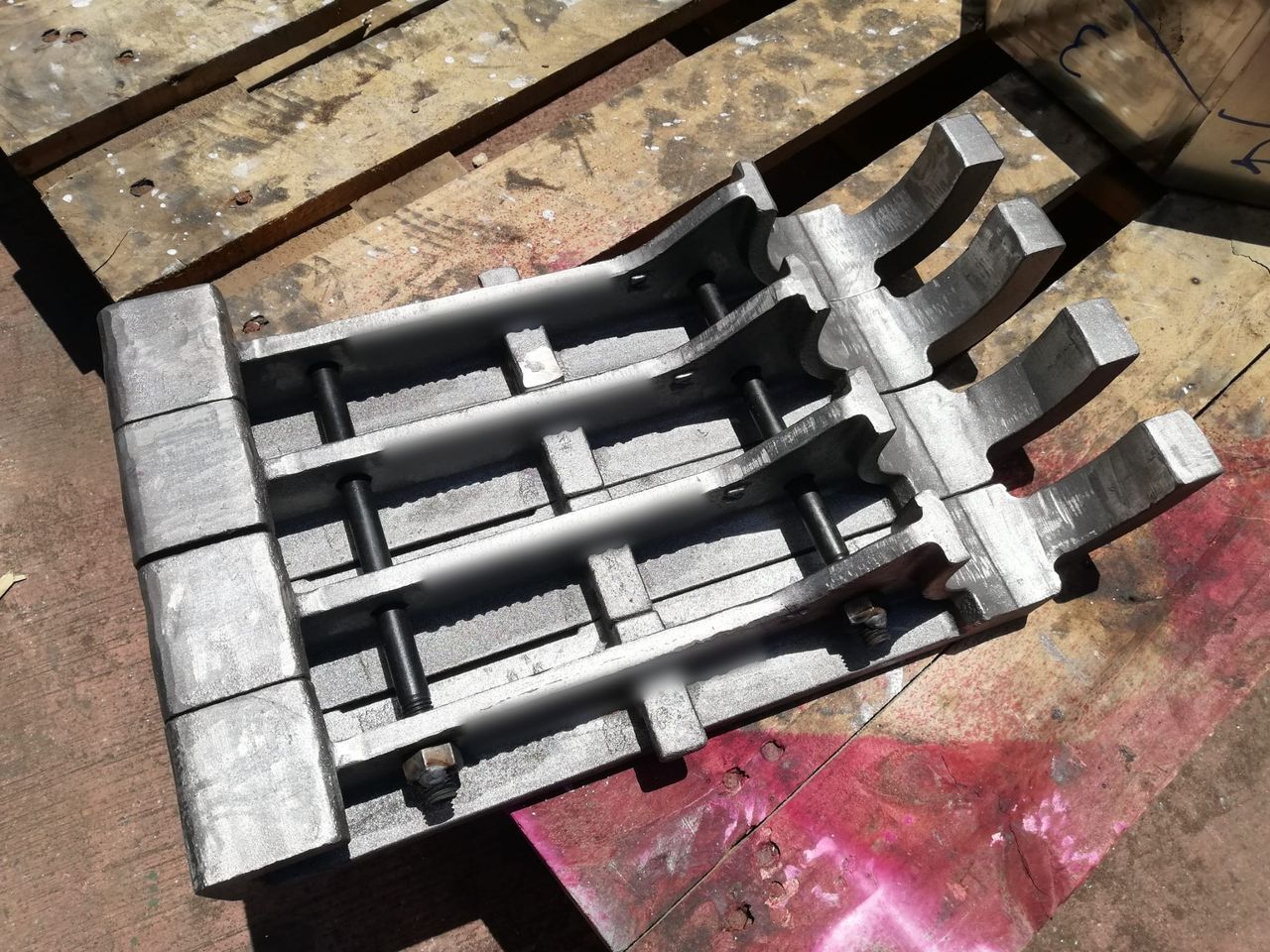
The foundries we work with cast the following material families. Grades are given with their European standard designation and, where common, the older DIN name.
Grey iron
to EN 1561: EN-GJL-200, EN-GJL-250 (GG25), EN-GJL-300
Ductile iron
to EN 1563: EN-GJS-400-15 (GGG40), EN-GJS-500-7, EN-GJS-600-3, EN-GJS-700-2
Cast steel
to EN 10293 and EN 10213: G20Mn5, G17CrMo5-5, and ASTM A216 WCB
Stainless cast steel
to EN 10283: GX5CrNi19-10 (1.4308), GX5CrNiMo19-11-2 (1.4408)
Abrasion-resistant white iron
to EN 12513 (Ni-Hard and high-chromium grades)
Aluminium
to EN 1706: EN AC-AlSi7Mg0.3 (G-AlSi7Mg), EN AC-AlSi10Mg, EN AC-AlSi9Cu3(Fe)
Copper alloys
to EN 1982: CuSn10-C, CuSn12-C, CuAl10Fe5Ni5-C, CuZn39Pb1Al-C
Other grades and ASTM equivalents are available on request. The materials page covers all material families we supply.
From raw casting to finished part
Most castings need more than casting. We include fettling, heat treatment, CNC machining, surface treatment and painting in the same order, so the part arrives ready to install. Typical post-casting steps are listed under secondary operations.
Quality checks for castings
Every casting order is checked against the drawing and the material standard. Depending on your specification, inspection covers:
- chemical analysis by spectrometer and mechanical tests (tensile, hardness)
- microstructure and nodularity for ductile iron
- dimensional inspection of first articles and series parts
- non-destructive testing: visual (VT), penetrant (PT), magnetic particle (MT), ultrasonic (UT) and radiographic (RT)
- pressure or leak tests for housings and valve bodies
Documents are described on the quality page.
Industries we supply castings to
Castings go into agricultural machinery, machinery and equipment, construction and mining equipment, energy and infrastructure, commercial vehicles and pumps, valves and hydraulics.
Send your drawing through the quote form and we will propose the casting process and send a quotation.
Frequently asked questions
Which casting process is right for my part?
Quantity, material, size and the required surface and tolerances decide. Sand casting suits low to medium volumes and large or heavy parts. Die casting suits high volumes of thin-walled aluminium parts. Investment casting suits small, complex steel parts that would need a lot of machining otherwise. We review the drawing and propose the process with the lowest total cost per finished part.
Do you supply castings machined and ready to install?
Yes. Castings can be supplied raw, rough machined or finish machined, and heat treated, coated or painted where required. We coordinate all steps and deliver one finished part.
What casting tolerances can I expect?
Casting tolerances depend on the process, the size of the feature and the foundry, and are usually specified as tolerance grades to ISO 8062-3. We do not state fixed limits in advance: send us your drawing and we will define the casting route and confirm which tolerances can be held as cast and which need machining.
Send your drawing. You get a quotation in 3 to 5 working days.
Your drawings are handled confidentially; NDA on request.