
Forging
Forging is a process in which heated steel is shaped under high pressure by hammers or presses, between dies or open tools. Because the metal is deformed instead of cast, forgings have a dense structure and a grain flow that follows the part shape, which gives high strength, toughness and fatigue resistance.
Request a quote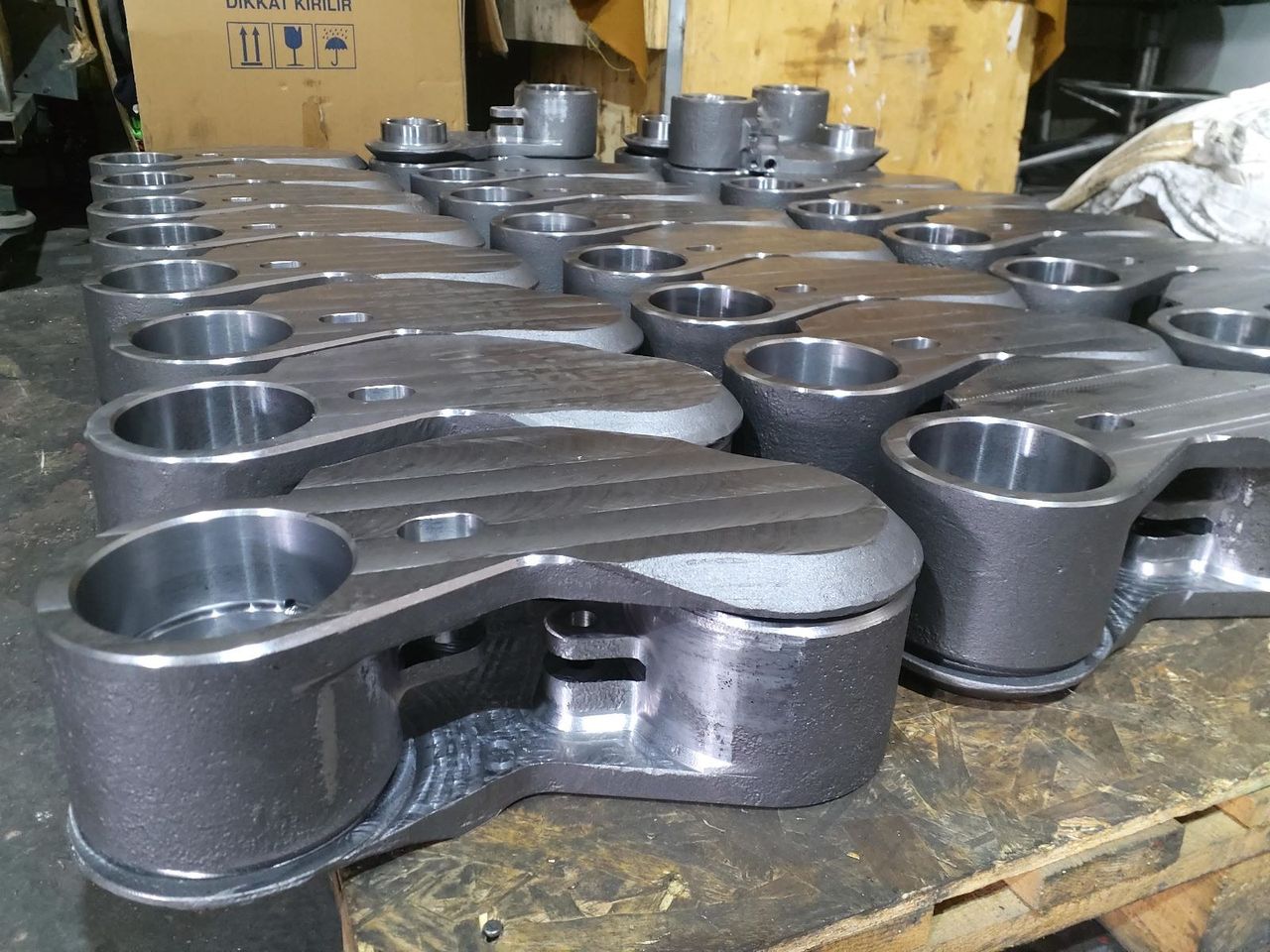
At a glance
Typical parts
- Shafts, axle shafts and PTO shafts
- Flanges and rolled rings
- Gear blanks and pinions
- Levers, forks, yokes and hooks
- Connecting rods and crank parts
- Hubs and couplings
Quantities
- Closed-die: series of the same part
- Open-die: large parts, small quantities
Inspection
- Material checked against the mill certificate
- Mechanical properties and hardness after heat treatment
- UT to EN 10228-3 and MT to EN 10228-1 if specified
- Full first article
Documents
- EN 10204 3.1 certificate
- Heat treatment record
- Dimensional report
How forging works
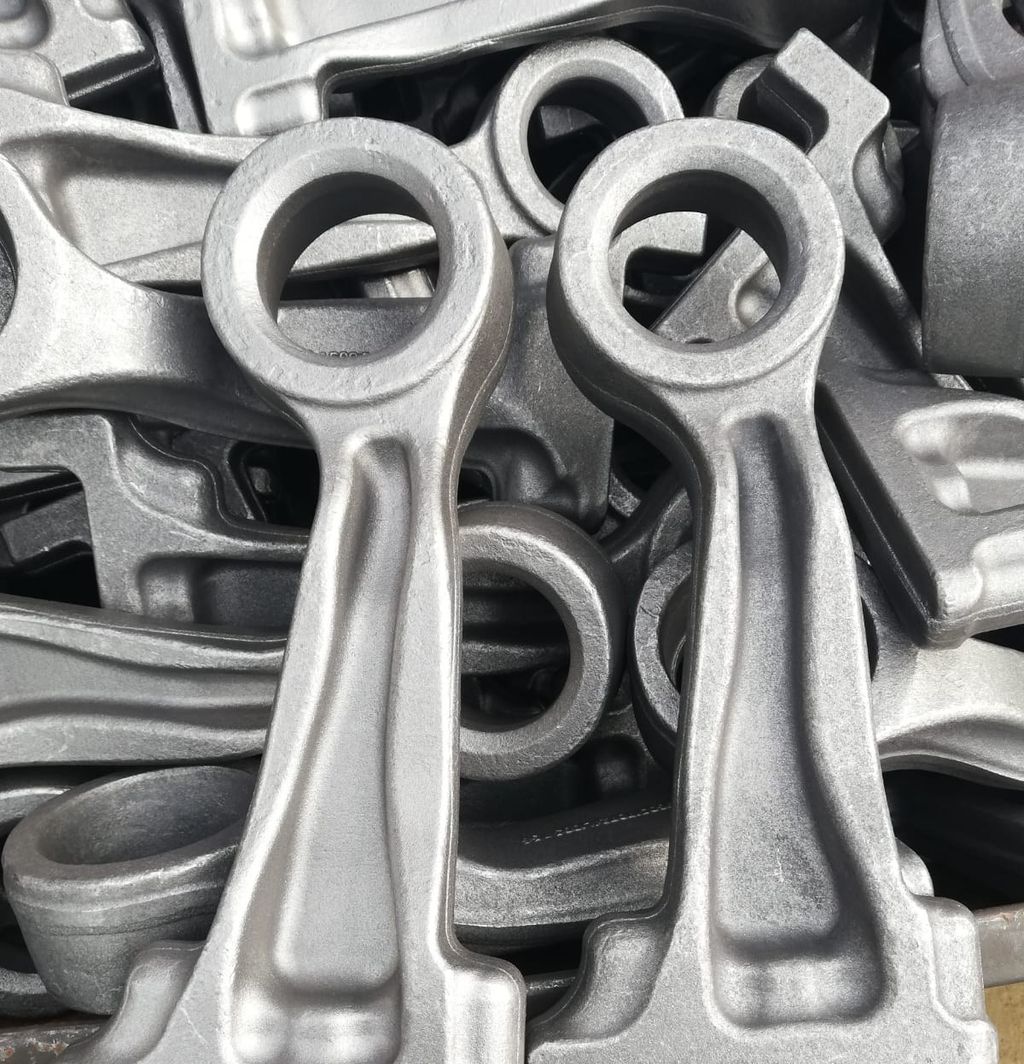
The steel, usually cut from bar or billet, is heated to forging temperature and shaped under a hammer or press. After forging, parts are trimmed, cleaned by shot blasting and heat treated as specified. Most forgings are then machined on functional surfaces.
Closed-die forging
presses the steel into shaped upper and lower dies. The dies define the part shape, and excess material flows out as flash, which is trimmed off. Suited to series of the same part.
Open-die forging
shapes the steel between flat or simple tools, step by step. No part-specific die is needed. Suited to shafts, blocks, discs and large parts in small quantities.
Ring rolling
forms a pierced blank into a ring without a weld seam between rolls. Used for flanges, bearing rings and gear rims.
Forging or casting: how to choose
Both processes produce near-net shapes, but they suit different parts.
| Forging | Casting | |
|---|---|---|
| Internal structure | dense, grain flow follows the shape | cast structure, may contain porosity |
| Strength and fatigue | higher, suited to alternating loads | lower for the same material family |
| Shape freedom | limited, no internal cavities | high, internal passages with cores |
| Typical parts | shafts, flanges, levers, rings | housings, pump and valve bodies |
| Tooling | dies for closed-die forging, none for open-die | patterns or dies depending on process |
A part that carries high or alternating loads and has a compact shape is usually forged. A part with internal cavities or a complex shape is usually cast. Some parts can go either way; in that case quantity, machining effort and the required properties decide. See the casting overview for the casting processes.
Quality checks and documents for forgings
Material is checked against the mill certificate and, where required, by chemical analysis. Mechanical properties and hardness are tested after heat treatment. Depending on the specification, forgings are tested by ultrasonic testing (UT) to EN 10228-3 and magnetic particle testing (MT) to EN 10228-1. First articles are measured in full.
Standard documents are a material certificate to EN 10204 3.1, a heat treatment record and a dimensional report. More on the quality page.
Materials for forging
Carbon steel
EN 10083-2
- C45 (1.0503)
Quenched and tempered alloy steel
EN 10083-3
- 42CrMo4 (1.7225)
- 34CrNiMo6 (1.6582)
Case-hardening steel
EN 10084
- 16MnCr5 (1.7131)
Stainless steel
EN 10088-3
- X5CrNi18-10 (1.4301)
- X2CrNiMo17-12-2 (1.4404)
Other grades on request. Forgings are delivered in the heat treatment condition you specify, for example normalised (+N) or quenched and tempered (+QT).
There is no fixed size or weight limit. Send us your drawing and we will define the right production route for the part and confirm feasibility. Tolerances for closed-die forgings are usually agreed with reference to EN 10243-1.
Is this the right process?
When another process is better
- Housings and parts with internal passages: sand casting or investment casting
- Small, complex steel parts in series: investment casting can save machining
- Simple turned parts in small quantities: CNC turning from bar avoids die costs
Related pages
- CNC turningCNC turned parts in steel, stainless steel, aluminium and brass from machine shops in Türkiye: shafts, pins, bushings and flanges, with dimensional reports.
- CNC millingCNC milled parts in steel, stainless steel and aluminium from machine shops in Türkiye: housings, plates, brackets and machined castings, with CMM reports.
- CNC grindingCNC cylindrical, centreless and surface grinding of shafts, pins, spools and plates from machine shops in Türkiye, usually after hardening, with reports.
- Secondary operationsHeat treatment, galvanising, powder coating, KTL e-coating, painting and assembly for cast, forged and machined parts, managed by QProcess in the same order.
- Agricultural machineryGearbox housings, PTO shafts, hubs, brackets, counterweights and wear parts for agricultural machinery manufacturers, produced by manufacturers in Türkiye.
- Construction and mining equipmentPins, bushings, hubs, housings, counterweights and wear parts for construction and mining equipment manufacturers, produced by manufacturers in Türkiye.
- Commercial vehicles and automotiveHubs, brackets, die cast housings, shafts and turned parts for commercial vehicle, trailer and automotive tier suppliers and the aftermarket, from Türkiye.
- Energy and infrastructureFlanges, rolled rings, shafts, bearing and gearbox housings, valve and pump parts for energy and infrastructure equipment, from manufacturers in Türkiye.
- How we workHow QProcess runs a project: engineering review, process and production planning, quotation, samples, series production and delivery, with one contact throughout.
Frequently asked questions
When should I choose forging instead of casting?
Choose forging when the part carries high or alternating loads, for example shafts, flanges, levers and gear blanks, and the shape can be formed without internal cavities. Choose casting when the part has internal passages or a complex shape, such as a housing. We look at the drawing and the load case and propose the process.
What is the difference between closed-die and open-die forging?
Closed-die forging presses the steel into shaped dies and suits series of the same part. Open-die forging shapes the steel between flat or simple tools and suits large parts, shafts and small quantities, because no part-specific die is needed.
Can you supply forgings machined and heat treated?
Yes. Forgings can be supplied raw, normalised or quenched and tempered, rough machined or finish machined to your drawing. We coordinate the forge, the heat treatment and the machine shop and deliver one finished part with one set of documents.
Send your drawing. You get a quotation in 3 to 5 working days.
Your drawings are handled confidentially; NDA on request.