
Sand casting
Sand casting is a casting process in which molten metal is poured into a mould made of compacted sand, which is broken up after the metal has solidified. It is the most widely used process for iron and steel castings and suits parts from single pieces to large series, including large and heavy parts.
Request a quote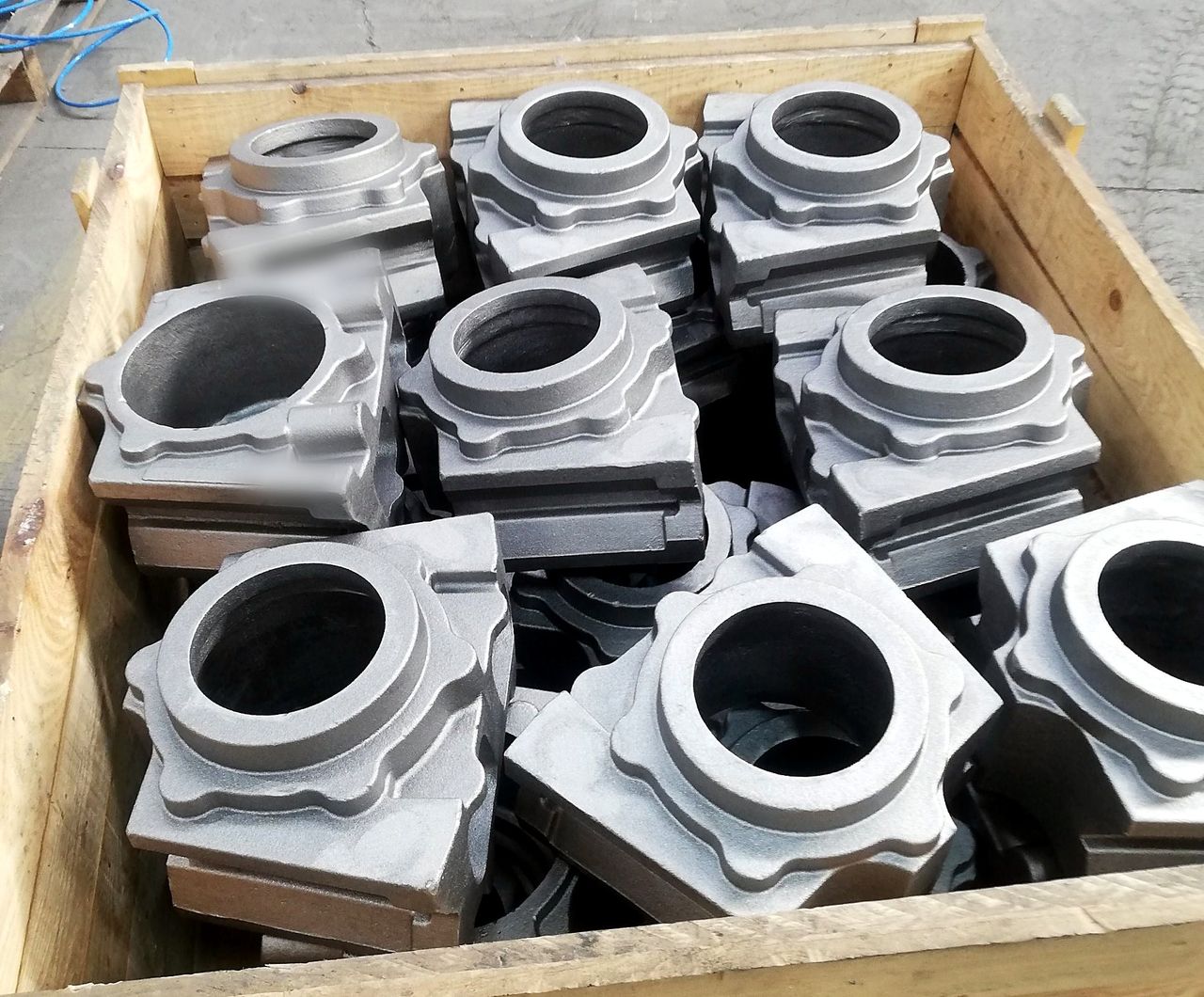
At a glance
Typical parts
- Gearbox and transmission housings
- Pump housings and impellers
- Valve bodies and fittings
- Hubs, brake drums and flywheels
- Brackets, supports and machine bases
- Counterweights for construction and agricultural machinery
- Manifolds and covers
Quantities
- Prototypes and spare parts
- Batches of a few pieces
- Medium and large series on moulding lines
Inspection
- Chemical analysis of each heat by spectrometer
- Mechanical properties on test bars
- Microstructure check for ductile iron
- VT, MT, PT, UT or RT to specification
- Pressure or leak test of housings
Documents
- EN 10204 3.1 certificate
- Dimensional report
- First article inspection report
How sand casting works
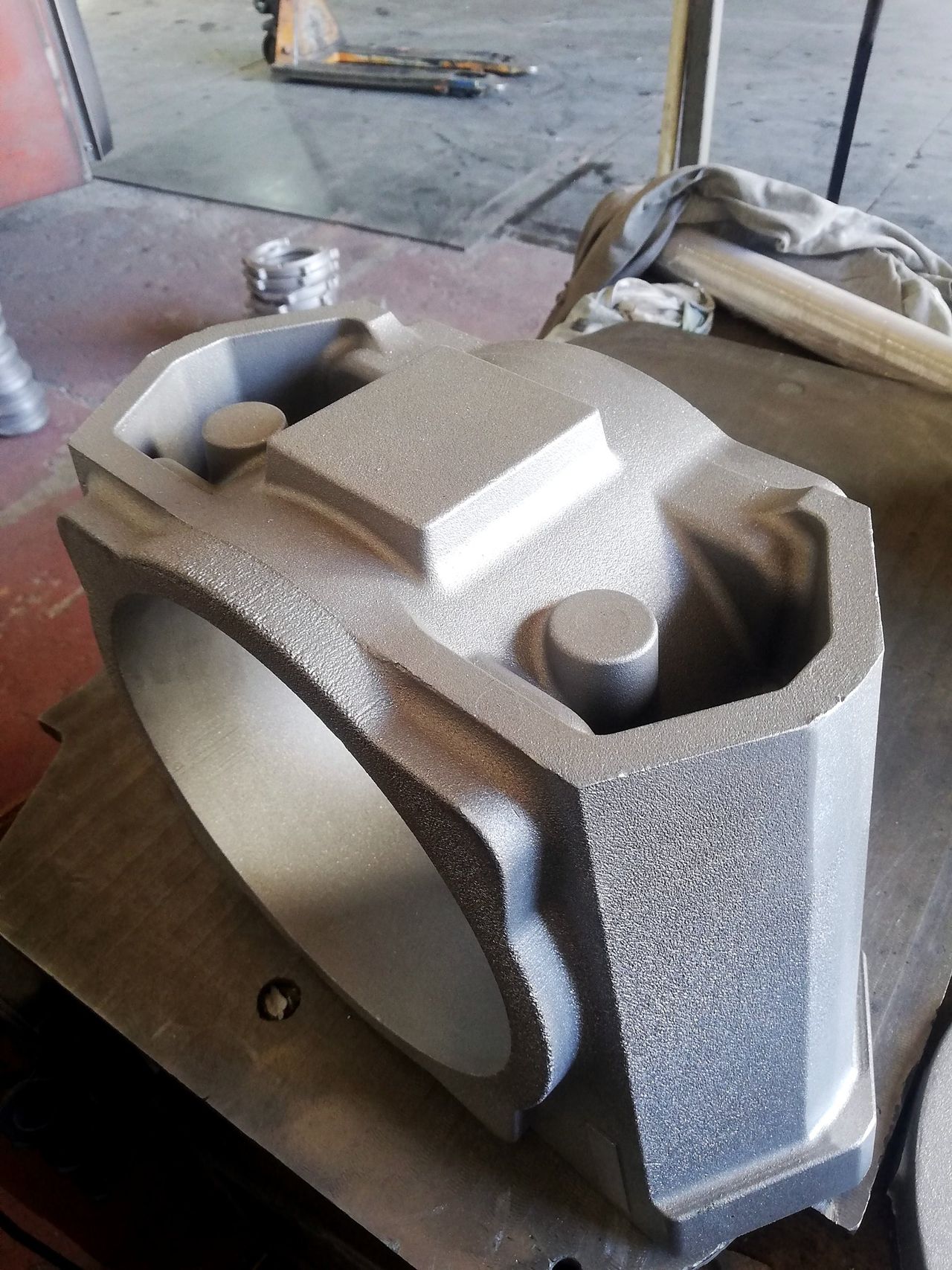
A pattern of the part, made of wood, plastic or metal, is pressed into moulding sand to form a cavity. Cores made of sand form internal passages, for example the water jacket of a housing. Molten metal is poured into the mould, and after cooling the sand is removed and the casting is fettled, which means gates, risers and parting lines are removed.
Two mould types are common:
Green sand moulding
bonded with bentonite clay and water. Used on automated horizontal or vertical moulding lines for medium and large series.
No-bake moulding
with chemically bonded sand, for example furan resin. Used for larger castings, smaller quantities and parts that need better dimensional stability.
Quality checks and documents for sand castings
Each heat is checked for chemical composition by spectrometer. Mechanical properties are tested on separately cast or attached test bars. For ductile iron the microstructure is checked for nodularity and matrix. Depending on your specification, castings are tested by visual inspection, magnetic particle (MT), penetrant (PT), ultrasonic (UT) or radiographic (RT) testing, and housings by pressure or leak test.
Standard documents are a material certificate to EN 10204 3.1 and a dimensional report. First articles come with a first article inspection report. More on the quality page.
Materials for sand casting
Grey iron
EN 1561
- EN-GJL-200
- EN-GJL-250 (GG25)
- EN-GJL-300
Ductile iron
EN 1563
- EN-GJS-400-15 (GGG40)
- EN-GJS-500-7
- EN-GJS-600-3
Cast steel
EN 10293
- G20Mn5
- G28Mn6
- ASTM A216 WCB
Stainless cast steel
EN 10283
- GX5CrNi19-10 (1.4308)
- GX5CrNiMo19-11-2 (1.4408)
White iron
EN 12513
- Ni-Hard and high-chromium grades
Aluminium
EN 1706
- EN AC-AlSi7Mg0.3
- EN AC-AlSi10Mg
Copper alloys
EN 1982
- CuSn10-C
- CuAl10Fe5Ni5-C
There is no fixed size or weight limit. Send us your drawing and we will define the right production route for the part and confirm feasibility. Dimensional tolerances are agreed as grades to ISO 8062-3.
Is this the right process?
When sand casting is the right choice
- The part is large or heavy
- Quantities are low to medium, or demand is uncertain and tooling cost must stay low
- The material is iron or steel. Die casting is not possible for these alloys
- The part has internal cavities that can be formed with sand cores
When another process is better
- Thin walls and high volumes in aluminium: die casting gives thinner walls, better surfaces and lower part cost at high quantities
- Small, complex steel parts: investment casting gives near-net shapes and saves machining
- Highly loaded parts with simple shapes: forging gives higher strength and fatigue resistance
- Rotationally symmetric parts such as bushings or liners: centrifugal casting gives a dense structure without cores
Related pages
- CNC machiningCNC turned, milled and ground parts, EDM, laser and waterjet cut parts from machine shops in Türkiye, from prototypes to series, with dimensional reports.
- Secondary operationsHeat treatment, galvanising, powder coating, KTL e-coating, painting and assembly for cast, forged and machined parts, managed by QProcess in the same order.
- Agricultural machineryGearbox housings, PTO shafts, hubs, brackets, counterweights and wear parts for agricultural machinery manufacturers, produced by manufacturers in Türkiye.
- Construction and mining equipmentPins, bushings, hubs, housings, counterweights and wear parts for construction and mining equipment manufacturers, produced by manufacturers in Türkiye.
- Machinery and equipmentMachine bases, housings, shafts, gear blanks, guides and plastic wear parts for machinery and equipment manufacturers, produced by manufacturers in Türkiye.
- Other industriesCast, forged, machined and plastic parts for pumps and valves, hydraulics, rail, material handling, industrial automation, robotics and marine equipment.
Frequently asked questions
What is the difference between green sand and no-bake sand casting?
Green sand moulds are bonded with clay and water and are used on automated moulding lines for medium and large series. No-bake moulds are bonded with a chemical binder such as furan resin and are used for larger parts and smaller quantities, with better dimensional stability. The foundry choice follows from the part size and the quantity.
Is sand casting suitable for small quantities?
Yes. Pattern costs are low compared to dies for die casting or investment casting, so sand casting is often the economical choice for prototypes, spare parts and batches of a few pieces. For very small quantities a wooden or printed pattern keeps the tooling cost down.
Do sand castings need machining?
Usually yes, on functional surfaces such as bearing seats, sealing faces and bolt holes. The as-cast surface is rougher than with die or investment casting. We supply sand castings raw or machined to your drawing.
Send your drawing. You get a quotation in 3 to 5 working days.
Your drawings are handled confidentially; NDA on request.